A - They control corrosion, scaling, microbes and guarantee efficient heat transfer.

Chemical Supplier for Cooling Tower, Boilers, Chillers, HVAC & Heat Exchangers
Premium Chemicals for Cooling Towers, Boilers & HVAC Systems
Cooling Towers :
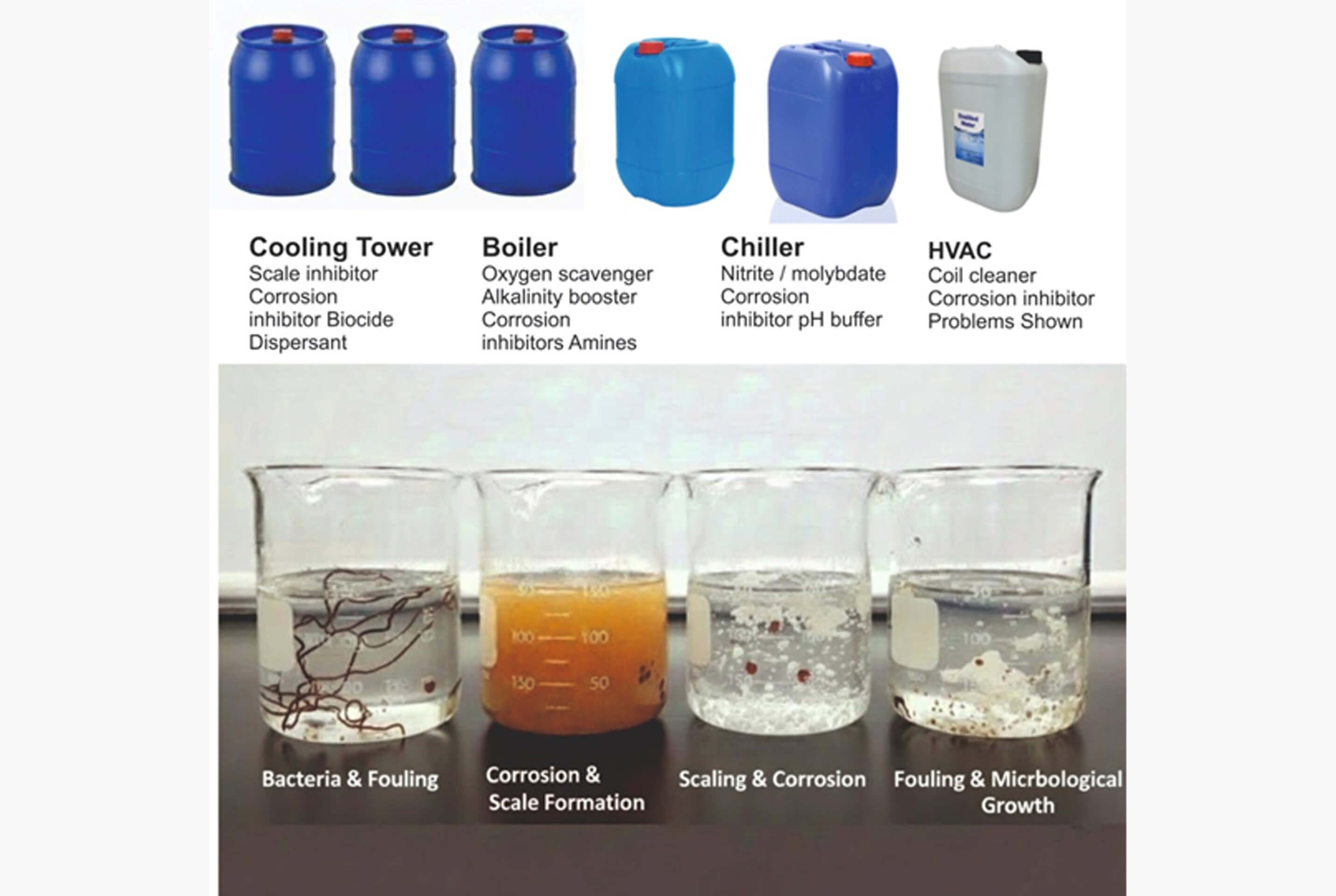
Chemicals used in cooling towers play a critical role in ensuring efficient heat transfer, equipment protection and long term operational reliability of industrial and HVAC cooling systems. A well-designed cooling tower water treatment program includes corrosion inhibitors, scale inhibitors, biocides and pH adjusters to control water chemistry and system performance. Corrosion inhibitors such as sodium molybdate, zinc phosphate, sodium nitrite and orthophosphates are used to protect metal components. They safeguard pipes, heat exchangers and tower structures from rusting and corrosion. These issues are caused by continuous exposure to water and dissolved oxygen. Effective corrosion control helps prevent equipment damage and system failure. Scale inhibitors or anti-scalants such as polyphosphates, phosphonates like HEDP and ATMP and carboxylic acid–based antiscalants are widely used in water systems. They prevent calcium and magnesium deposits formed due to hard water conditions. This helps in maintaining ideal heat exchanger performance. As a result, energy consumption is reduced and system efficiency is improved. Biocides and microbial control chemicals such as chlorine, sodium hypochlorite, bromine and non-oxidizing biocides like glutaraldehyde and isothiazolinone are essential in cooling systems. They effectively control algae, bacteria and biofilm formation. These chemicals help mitigate legionella risks. They are critical for safe operation of open recirculating cooling tower systems. pH adjusters such as sulfuric acid, hydrochloric acid, sodium hydroxide and soda ash are used in cooling water systems. They maintain the ideal pH range of 6.5 to 8.5 for stable operation. Proper pH control prevents excessive corrosion at low pH and scale formation at high pH. This improves cooling tower chemical treatment efficiency.
Boilers :
Chemicals used in boilers are essential for efficient steam generation, equipment protection and long term reliability of industrial boiler systems and process heating applications. A complete boiler water treatment program includes oxygen scavengers such as sodium sulfite and DEHA which remove dissolved oxygen from boiler feed water to prevent internal corrosion of boiler tubes and drums. Scale inhibitors are applied to control calcium and magnesium salts, preventing hard scale deposits that reduce heat transfer efficiency and increase fuel consumption. Corrosion inhibitors protect boiler metal surfaces from rusting and chemical attack caused by water impurities and aggressive operating conditions. Phosphates such as sodium phosphate and trisodium phosphate, react with hardness ions to form soft sludge that can be removed through blowdown, minimizing scale formation. Alkalinity builders and pH adjusters maintain the correct boiler water pH, safeguarding steel surfaces from acidic corrosion and supporting chemical performance. Anti-foaming agents reduce foaming and steam carryover, ensuring dry steam output for further processes. Sludge conditioners aid in collecting particle solids for easy removal while condensate treatment chemicals protect steam and condensate lines from oxygen and carbonic acid corrosion. Descaling chemicals are used during maintenance to remove existing scale deposits, restoring boiler reliability.
Chillers :
Chemicals used in chillers are essential for maintaining system reliability, performance and equipment protection in HVAC and industrial cooling applications. A chiller water treatment program includes corrosion inhibitors that protect metal surfaces such as pipes, condensers and evaporators from rust and chemical corrosion caused by water and oxygen. Scale inhibitors and antiscalants are applied to prevent calcium, magnesium and mineral deposition inside chiller systems, preserving heat transfer performance and reducing operational losses. Biocides and algaecides are essential for controlling bacteria, algae, slime and biofilm growth which can clog heat exchanger and reduce cooling performance. pH adjusters and alkalinity builders maintain ideal water chemistry by controlling acidity and alkalinity, preventing both corrosion at low pH levels and scaling at high pH conditions. Oxygen scavengers such as sodium sulfite remove dissolved oxygen from water, minimizing corrosion of metallic components. Anti-foaming agents are used to reduce foam formation in chillers and cooling towers, maintaining stable water circulation and preventing losses. Sludge conditioners and dispersants keep solid particles and sediments dispersed, allowing easy removal through filtration while maintaining proper chiller operation across industrial buildings and process cooling.
HVAC Systems :
Chemicals used in HVAC systems are essential for reliable cooling performance, energy efficiency, indoor air quality and equipment protection across residential, commercial and industrial applications. The primary chemicals in HVAC systems are refrigerants which enable heat transfer by absorbing heat from indoor air and releasing it outdoors as part of the cooling cycle. Common refrigerants include R-22 (HCFC, now being phased out), R-410A (HFC) and newer options such as R-134a, R-32 and low-GWP R-1234yf, selected based on system design and environmental compliance. In chilled water HVAC systems, water treatment chemicals are critical for maintaining system integrity. Corrosion inhibitors such as sodium nitrite, molybdates and phosphates protect steel, copper and aluminum components from rust and chemical corrosion, extending equipment life. Scale inhibitors and antiscalants such as polyphosphates and phosphonates, prevent mineral deposition on heat exchangers, preserving heat transfer performance. Biocides and microbial control chemicals like chlorine, bromine, glutaraldehyde and isothiazolinone control bacteria, algae and mold that cause fouling, odors and health risks. pH adjusters such as sulfuric acid and sodium hydroxide maintain ideal water chemistry between pH 6.5 and 8.5, preventing corrosion and scaling. In addition, cleaning and maintenance chemicals such as acidic or alkaline coil cleaners and foaming or aerosol disinfectants, are used to remove dust, grease and biofilms, improving airflow, cooling capacity, hygiene and HVAC system efficiency.
Technical Specifications :
- High-Purity Industrial Chemicals for cooling towers, boilers, chillers, and HVAC systems
- Advanced Scale and Corrosion Inhibitors for enhanced equipment longevity
- Biocides & Anti-Fouling Agents to prevent microbial growth
- pH and Conductivity Stabilizers for optimized water chemistry
- Compatible with Various Industrial Systems in Doha and Riyadh, Saudi Arabia
- Custom Formulations Available to meet specific client requirements
- Safe Handling and Storage Standards with MSDS documentation
- Environmentally Compliant Chemicals for sustainable operations
- industrial water treatment chemicals supplier in Riyadh, Saudi Arabia & Doha
- High Solubility and Stability for long-term performance
- Specialty Chemicals for HVAC Efficiency Optimization
- Multi-Phase Treatment Solutions for complex systems
Applications :
- Cooling Towers for industrial and commercial facilities
- Boilers & Steam Generation Units
- Chillers & HVAC Systems in Riyadh
- Heat Exchangers & Process Water Systems
- Industrial Manufacturing Plants
- Hotels, Hospitals & Commercial Buildings
- Municipal Water Systems
- Power Plants & Utility Operations in Saudi Arabia industrial HVAC chemical suppliers
- Water Treatment & Circulation Systems Requiring Chemical Maintenance
Frequently Asked Questions (FAQs)?
-
Q - : Why are chemicals used in cooling towers?
-
Q - Which chemicals protect cooling tower metal parts?
-
Q - What is the function of biocides in cooling systems?
-
Q - Why are chemicals essential in boiler systems?
-
Q - What role do oxygen scavengers play in boilers?
-
Q - Why are water treatment chemicals used in chillers?
-
Q - What chemicals are used in HVAC chilled water systems?
-
Q - Why is pH control important in all systems?